

The Ripple Effect: August 2026
Welcome to PeaceForAll.org's "The Ripple Effect" for August 2026. This month, we explore how small, intentional changes in our character can create profound positive impacts, extending to those around us and especially to future generations. Join us in cultivating a better world, one thoughtful action at a time.
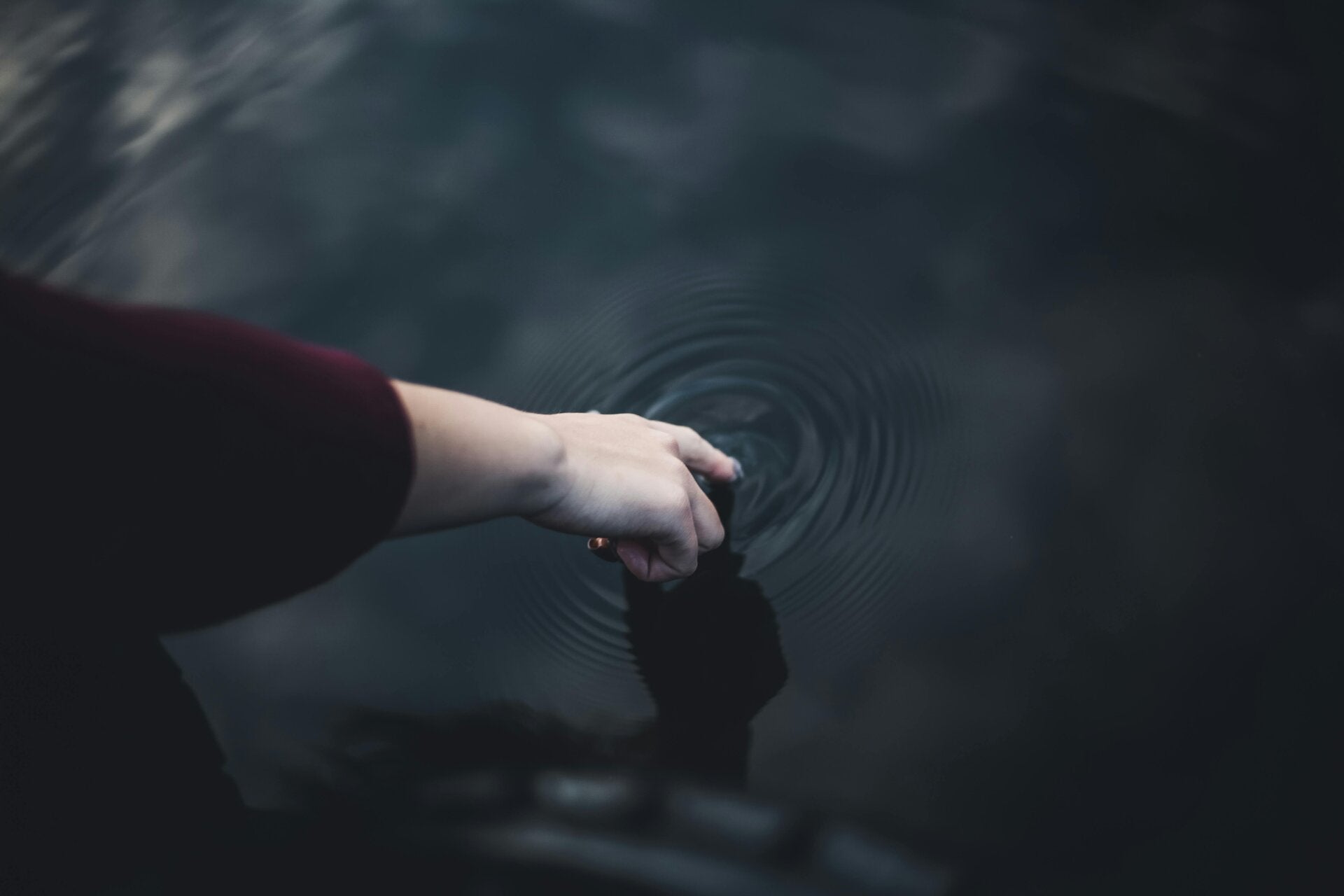
Changing character, changing the world
The Ripple Effect is a storytelling blog dedicated to the transformative power of small personal changes. We believe that by refining our character in minor ways, we can benefit everyone in our path and inspire our little ones to enjoy the planet as we once did. This month, we delve into stories that highlight these subtle yet powerful shifts.

A message for all humanity
This page is for all mankind—people who enjoy helping and preserving humanity on planet Earth, one small step at a time. Our goal is simple: to treat others the way we wish to be treated. We believe in caring for one another, rather than causing harm. Peace is the key to freedom, bringing peace of mind, body, and soul. Let's unite in love and care for everyone, regardless of religious beliefs, race, or differing opinions. We are all different, yet fundamentally the same. ✌️
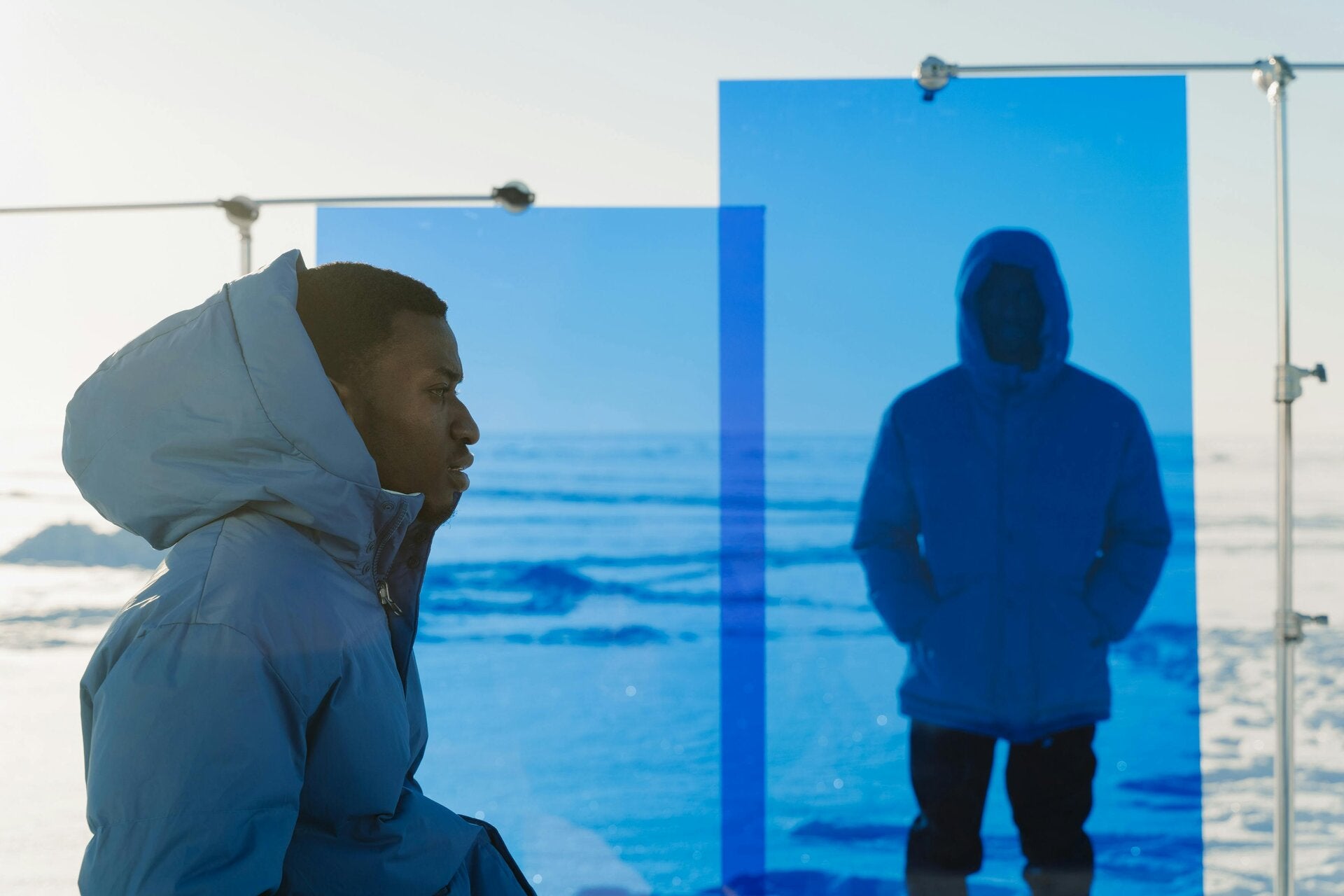
Your actions shape our future
After visiting this page, we hope you'll take a moment to reflect on your actions and consider how you can make better choices in your own life. Imagine a world where we work together, rather than against each other. By embracing understanding, compassion, and personal responsibility, we can collectively create a better place for everyone. ✌️
THE RIPPLE EFFECT
www.Peace4AllMankind.com
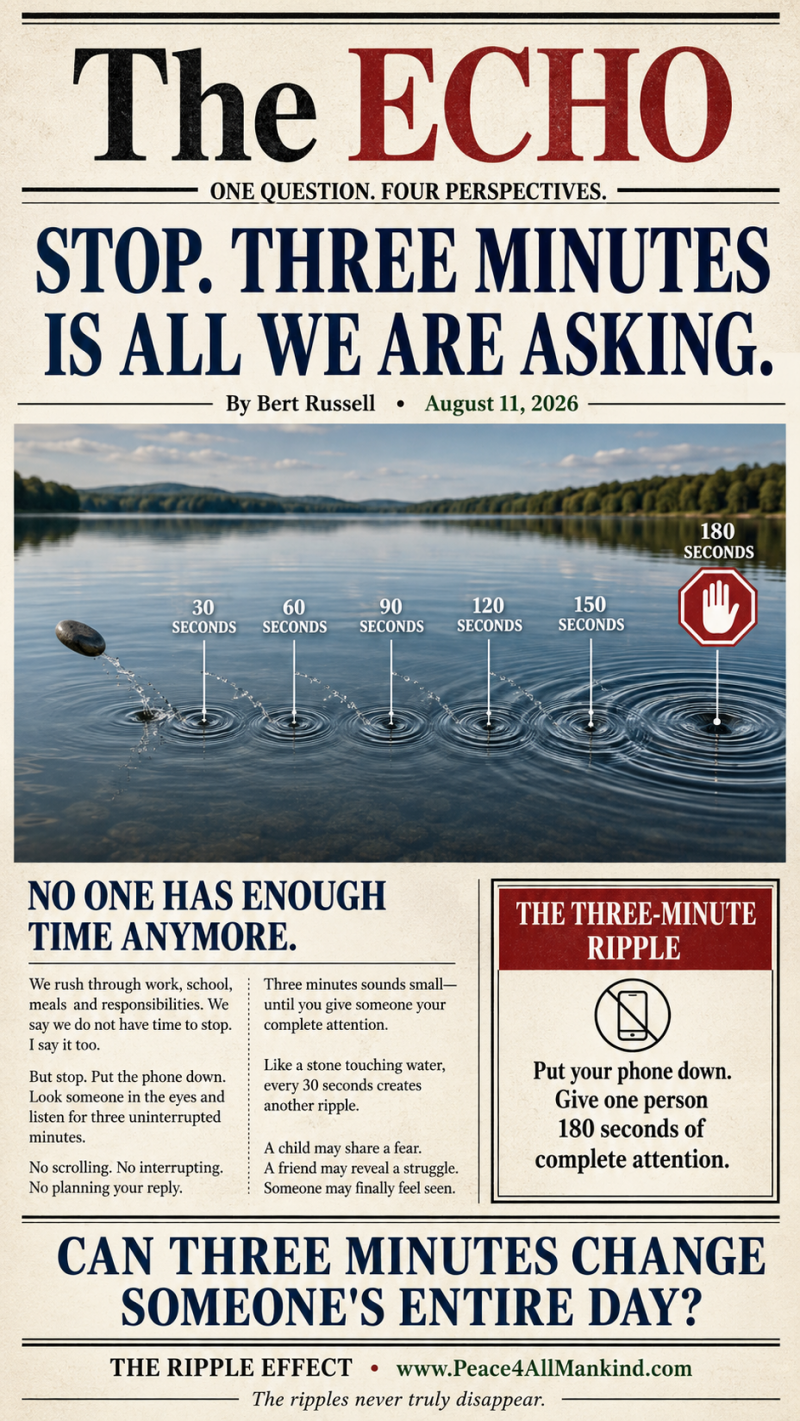
THREE MINUTES WITHOUT THE PHONE
August 11, 2026
This week, families across the country are returning to the back-to-school routine. Alarm clocks are ringing earlier. Parents are checking supply lists, arranging transportation, preparing meals, and trying to stretch money that already feels stretched thin.
Children are entering new classrooms. Some are excited. Others are nervous, lonely, or afraid they will not fit in. Adults are also carrying worries—from work, bills, relationships, and the responsibilities waiting for them every morning.
Everyone seems to be rushing somewhere.
We often say we do not have enough time to stop and listen. Yet we somehow find time to check another notification, watch another video, or scroll past the lives of people we may never meet.
What if we put the phone down for just three minutes?
Not 30 minutes. Not 20. Not 10. Not even five.
Three.
Three is an odd number. People do not usually recommend three minutes, and that is precisely why it makes us think. Three minutes sounds short—until we sit quietly, look someone in the eyes, and give that person our complete attention.
No phone. No television. No interrupting. No planning what we will say next.
Just listen!!!
A child may finally explain why school makes them nervous. A spouse may reveal what has been weighing on them. A coworker may admit that they are overwhelmed. A stranger may simply appreciate being treated like a human being.
Three minutes of genuine attention can travel like a stone skipping across a quiet lake. The first touch may appear small, but each contact creates another ripple. The person who feels heard may become more patient with someone else. That patience may reach a family, a classroom, a workplace, or an entire community.
We do not always need money, influence, or a grand plan to change someone’s day.
Sometimes, we only need three minutes.
THIS WEEK’S RIPPLE
Once each day, put your phone down and give someone three uninterrupted minutes of your complete attention.
At the end of the week, ask yourself:
Did the person behave differently after being heard?
Did I learn something I would have otherwise missed?
Did those three minutes change me too?
Can three minutes of undivided attention change someone’s entire day?
Now it’s your turn.
“The ripples never truly disappear.” ✌️ ☮️
Education is the key. Teaching is the degree.
THE RIPPLE EFFECT
FREEDOM NEEDS OPEN WATER
August 10, 2026
www.Peace4AllMankind.com
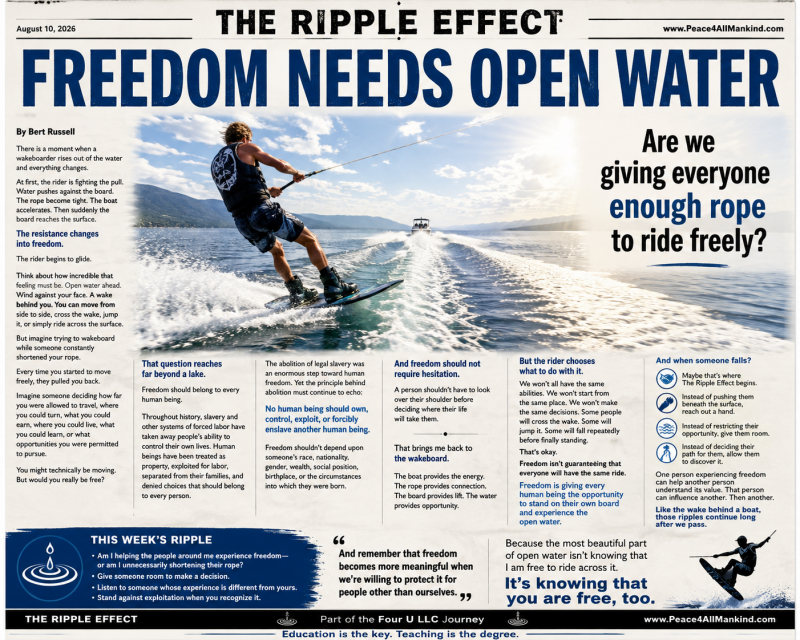
There is a moment when a wakeboarder rises out of the water and everything changes.
At first, the rider is fighting the pull. Water pushes against the board. The rope becomes tight. The boat accelerates. Then suddenly the board reaches the surface.
The resistance changes into freedom.
The rider begins to glide.
Think about how incredible that feeling must be. Open water ahead. Wind against your face. A wake behind you. You can move from side to side, cross the wake, jump it, or simply ride across the surface.
But imagine trying to wakeboard while someone constantly shortened your rope.
Every time you started to move freely, they pulled you back.
Imagine someone deciding how far you were allowed to travel, where you could turn, what you could earn, where you could live, what you could learn, or what opportunities you were permitted to pursue.
You might technically be moving.
But would you really be free?
That question reaches far beyond a lake.
Freedom should belong to every human being.
Throughout history, slavery and other systems of forced labor have taken away people's ability to control their own lives. Human beings have been treated as property, exploited for labor, separated from their families, and denied choices that should belong to every person.
The abolition of legal slavery was an enormous step toward human freedom. Yet the principle behind abolition must continue to echo:
No human being should own, control, exploit, or forcibly enslave another human being.
Freedom shouldn't depend upon someone's race, nationality, gender, wealth, social position, birthplace, or the circumstances into which they were born.
And freedom should not require hesitation.
A person shouldn't have to look over their shoulder before deciding where their life will take them.
That brings me back to the wakeboard.
The boat provides the energy. The rope provides connection. The board provides lift. The water provides opportunity.
But the rider chooses what to do with it.
That's what a free society should strive to provide.
We won't all have the same abilities. We won't start from the same place. We won't make the same decisions. Some people will cross the wake. Some will jump it. Some will fall repeatedly before finally standing.
That's okay.
Freedom isn't guaranteeing that everyone will have the same ride.
Freedom is giving every human being the opportunity to stand on their own board and experience the open water.
And when someone falls?
Maybe that's where The Ripple Effect begins.
Instead of pushing them beneath the surface, reach out a hand.
Instead of restricting their opportunity, give them room.
Instead of deciding their path for them, allow them to discover it.
One person experiencing freedom can help another person understand its value. That person can influence another. Then another.
Like the wake behind a boat, those ripples continue long after we pass.
THIS WEEK'S RIPPLE
Ask yourself:
Am I helping the people around me experience freedom—or am I unnecessarily shortening their rope?
Give someone room to make a decision.
Listen to someone whose experience is different from yours.
Stand against exploitation when you recognize it.
And remember that freedom becomes more meaningful when we're willing to protect it for people other than ourselves.
Because the most beautiful part of open water isn't knowing that I am free to ride across it.
It's knowing that you are free, too.
The ripples never truly disappear.
THE RIPPLE EFFECT
Part of the Four U, LLC Journey
www.Peace4AllMankind.com
✌️ of MIND, BODY, and SOUL...✌️☮️
Education is the key. Teaching is the degree.
The Ripple Effect
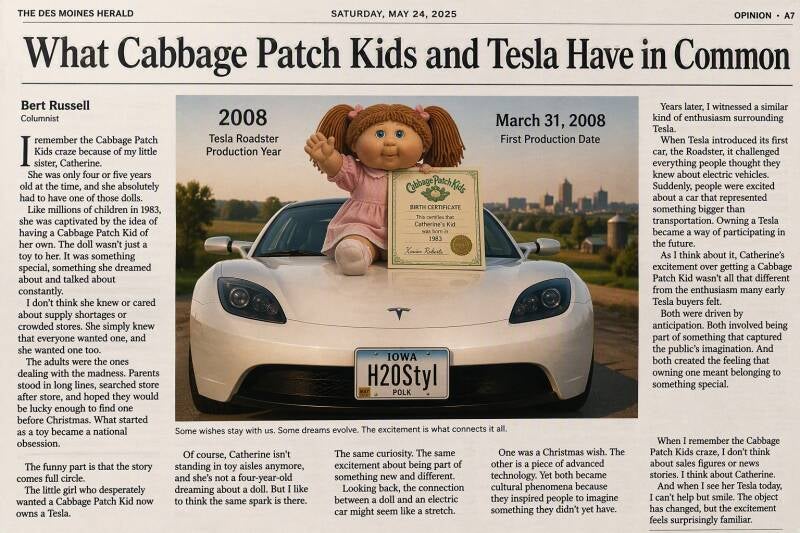
What Cabbage Patch Kids and Tesla Have in Common
August 9, 2026 @ 7:24 PM
I remember the Cabbage Patch Kids craze because of my little sister, Catherine.
She was only four or five years old at the time, and she absolutely had to have one of those dolls. Like millions of children in 1983, she was captivated by the idea of having a Cabbage Patch Kid of her own. The doll wasn't just a toy to her. It was something special, something she dreamed about and talked about constantly.
I don't think she knew or cared about supply shortages or crowded stores. She simply knew that everyone wanted one, and she wanted one too.
The adults were the ones dealing with the madness. Parents stood in long lines, searched store after store, and hoped they would be lucky enough to find one before Christmas. What started as a toy became a national obsession.
Years later, I witnessed a similar kind of enthusiasm surrounding Tesla.
When Tesla introduced its first car, the Roadster, it challenged everything people thought they knew about electric vehicles. Suddenly, people were excited about a car that represented something bigger than transportation. Owning a Tesla became a way of participating in the future.
As I think about it, Catherine's excitement over getting a Cabbage Patch Kid wasn't all that different from the enthusiasm many early Tesla buyers felt.
Both were driven by anticipation. Both involved being part of something that captured the public's imagination. And both created the feeling that owning one meant belonging to something special.
The funny part is that the story comes full circle.
The little girl who desperately wanted a Cabbage Patch Kid now owns a Tesla.
Of course, Catherine isn't standing in toy aisles anymore, and she's not a four-year-old dreaming about a doll. But I like to think the same spark is there. The same curiosity. The same excitement about being part of something new and different.
Looking back, the connection between a doll and an electric car might seem like a stretch. One was a Christmas wish. The other is a piece of advanced technology. Yet both became cultural phenomena because they inspired people to imagine something they didn't yet have.
When I remember the Cabbage Patch Kids craze, I don't think about sales figures or news stories. I think about Catherine.
And when I see her Tesla today, I can't help but smile. The object has changed, but the excitement feels surprisingly familiar.
Do you have similar memories of people and their wants?
✌️
The Ripple Effect
The Dream Beneath the Water
August 2 @ 9:35 PM
Some dreams are built.
Some dreams are buried.
And some dreams become something even greater than the person who first imagined them.
Long before Beaver Lake became one of America's most beautiful lake destinations, an entrepreneur named William Hope "Coin" Harvey had a vision. In the early 1900s, he created Monte Ne—a resort community along the White River designed to attract visitors seeking beauty, recreation, and a slower pace of life. The resort featured hotels, gardens, entertainment, boating, golf, and even its own railroad connection.
Harvey wasn't simply constructing buildings.
He was telling a story.
He believed this corner of northwest Arkansas was worth experiencing long before most people had ever heard of it.
For a time, people believed in that story.
But dreams don't always unfold as planned.
As automobiles changed the way Americans traveled and economic conditions shifted, Monte Ne gradually declined. Harvey continued dreaming—even planning an enormous pyramid to preserve knowledge for future generations—but his grand vision was never completed.
Many would call that failure.
History tells a different story.
In the 1960s, the U.S. Army Corps of Engineers built Beaver Dam, creating Beaver Lake. As the water slowly rose, most of Monte Ne disappeared beneath the surface. The resort vanished, but the landscape remained.
The limestone bluffs...
The crystal-clear water...
The rolling Ozark hills...
The peaceful coves...
They became the foundation for something Harvey could never have fully imagined.
Today, families teach their children to fish.
Friends gather around campfires.
Wakeboarders chase perfect morning water.
Boaters explore hidden coves.
Photographers capture breathtaking sunrises.
Millions of memories are created every year on Beaver Lake.
The resort disappeared.
The destination did not.
Maybe Harvey's greatest accomplishment wasn't the business he built.
Maybe it was helping people see the beauty that had always been there.
His buildings didn't survive.
His idea did.
That is the Ripple Effect.
Sometimes our original dream doesn't become our legacy.
Sometimes our vision inspires something far larger than ourselves.
One entrepreneur dreamed of building a resort.
Generations inherited a place where families make memories together.
Ideas ripple through time in ways we can never fully predict.
The buildings may fade.
The conversations continue.
The dream changes.
The impact remains.
Because the greatest ripple isn't always what we build.
**Sometimes it's what we inspire others to keep discovering long after we're gone.** ✌️
- Bert Russell